

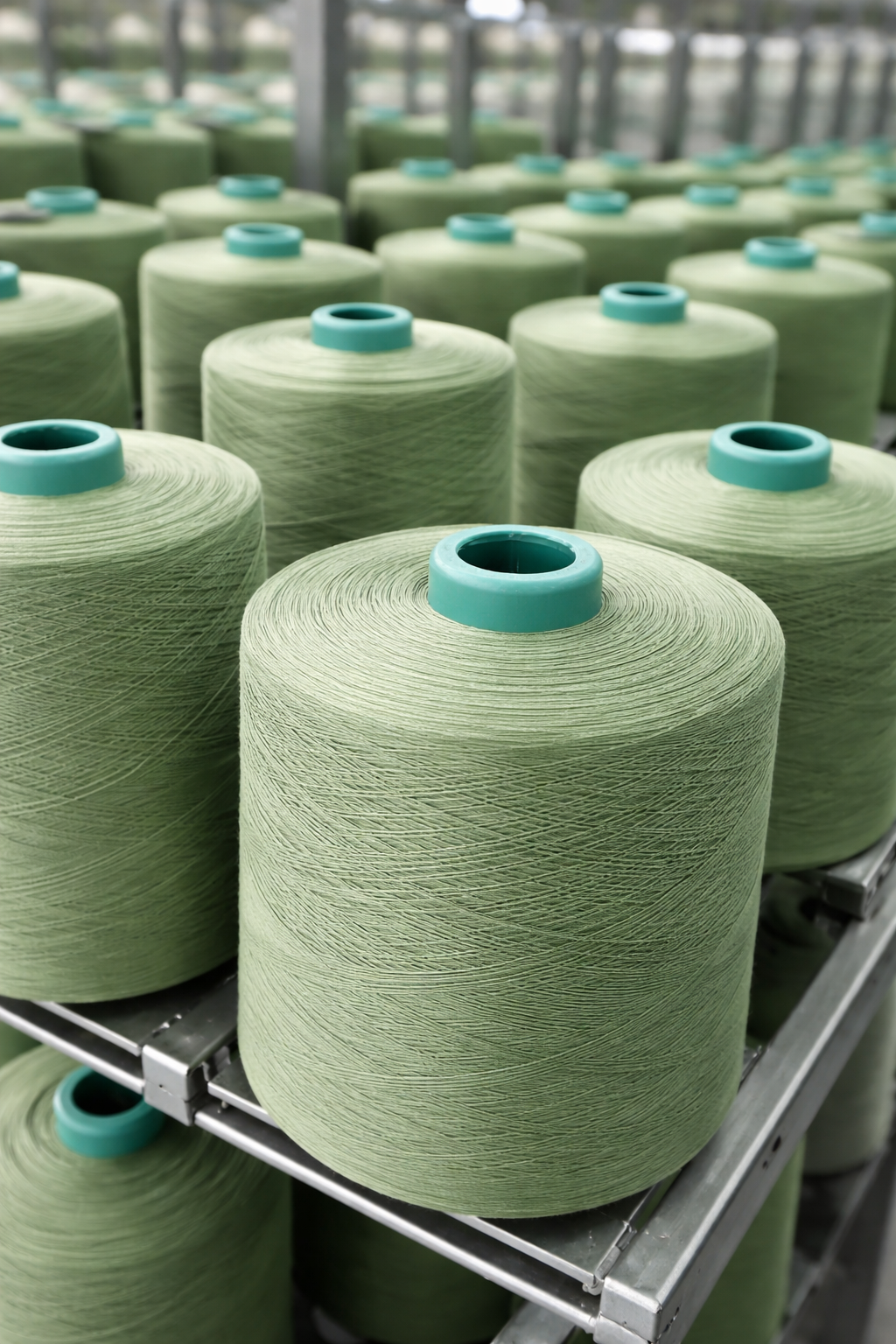
Industrially dyed yarns
DisruptColor

Industrial dyeing for polyester and cotton yarns

Pantone development, sampling, and controlled batches for footwear, apparel, and technical textile manufacturers.

View services
1-100 kgStarting batches
Pantone + customColor development
Water controlProcess criterion
Leon, MXIndustrial base
Services

Sampling, Pantone, and production

From evaluation batches to runs ready for weaving, braiding, or finishing.

Cotton yarn dyeing

Processes focused on cotton with shade uniformity and stable preparation for weaving, braiding, or downstream finishing.

  • Compatibility with carded and combed cotton
  • Shade evaluation on real fiber
  • Preparation for weaving, braiding, or finishing

Polyester yarn dyeing

Polyester specialization focused on color fixation, recipe validation, and repeatability for narrow textiles, footwear, and apparel.

  • Filament, textured, or recycled polyester subject to validation
  • Shade tuning based on reference and end use
  • Preparation for braiding, weaving, or assembly lines

Custom color development

DisruptColor translates visual references or textile Pantone targets into a validated recipe on the target fiber and presentation.

  • Textile Pantone and proprietary references
  • Adjustments by fiber, yarn count, and construction
  • Approved shade definition for sampling or bulk

Batch dyeing

Model oriented to 1, 5, 20, 50, and 100 kg batches for pilots or programs that need batch control and continuity.

  • Planning by batch size
  • Approved reference control
  • Repeatability across runs

Production dyeing

Service designed for teams that have already validated color and now need controlled fixation, drying, and final presentation with industrial discipline.

  • Scale-up on an approved recipe
  • Fixation, drying, and re-coning
  • Stable preparation for manufacturing
Process

Fix color and repeat it

Recipe, preparation, fixation, and release with traceability.

1

Color specification and end use

The Pantone or physical reference, the fiber, yarn construction, end use, and batch range are defined to start with clarity.

Technical color brief
2

Lab sample and recipe

The initial recipe is validated on the target fiber to observe shade, color behavior, and chemical adjustment margin.

Validated base recipe
3

Yarn preparation and approval

The yarn is prepared in the right presentation for the process and approval is closed with visual and operational criteria before scale-up.

Approval and run setup
4

Fixation, centrifuging, and drying

The industrial run executes the dyeing and fixation baths, stabilizes the yarn, and leaves the batch ready for final presentation.

Fixed and stabilized batch
5

Re-coning, control, and release

The result is reviewed against the approved reference, the batch is documented, and it is delivered in the presentation required by manufacturing.

Traced batch ready for delivery
Capabilities

Lab, water, and batch control

Formulation, water treatment, and documentation to sustain approved color.

Lab work and formulation

Formulation starts in the lab and under chemical oversight to sustain repeatability between sample and production.

  • Textile Pantone and special shades
  • Recipe adjustments before scale-up
  • Approval and learning records

Water treatment

Water treatment is integrated into the process because of environmental demands and international client requirements.

  • Water use under operational control
  • Sustainability criteria for export programs
  • Visibility on inputs and process handling

Batch control

Execution is organized from 1 kg samples through 100 kg production batches to sustain continuity.

  • Batch and run identification
  • Sample-to-pilot-to-production correlation
  • Release before delivery

Color repeatability

The priority is to repeat an approved shade with less commercial and technical uncertainty.

  • Approved reference as the anchor
  • Comparison between the current and previous batch
  • Documentation for reorders
Why DisruptColor

What makes us different

Three pillars behind every color project.

Based in Leon, Guanajuato

We operate from the heart of the Bajio footwear, apparel, and narrow-textile cluster. That proximity cuts response times and simplifies logistics for manufacturers across the region and all of Mexico.

Integrated water control

Water treatment is not an add-on — it is built into the process from the start. That addresses environmental demands, international client requirements, and a commitment to more responsible operations.

Repeatable, documented color

Every batch is documented with recipe, process conditions, and approved reference. When you need to repeat a color months later, the information is ready to produce with the same consistency.

Industries

Sectors that trust our color

We serve manufacturing, development, and sourcing teams across the Bajio and all of Mexico.

Footwear
Apparel
Narrow textiles
Yarn suppliers
Developers
Industrial textiles
Color

Pantone as start, fiber as criterion

Matching on the real substrate — yarn, process, and batch.

Tangerine — Pantone 17-1462

Viva Magenta — Pantone 18-1750

Peach Fuzz — Pantone 13-1023

Mocha Mousse — Pantone 17-1230

Living Coral — Pantone 16-1546

Classic Blue — Pantone 19-4052

Turquoise — Pantone 15-5519

Ultra Violet — Pantone 18-3838

Greenery — Pantone 15-0343

Bright White — Pantone 11-0601

Knowledge center

Latest articles

Technical guides for textile manufacturing teams.

How cotton yarn dyeing works

How cotton yarn dyeing works

Key points for understanding how a shade is defined, validated in sampling, and turned into a manufacturing-ready batch.

Read article
Polyester yarn dyeing techniques

Polyester yarn dyeing techniques

What changes when working with polyester and why recipe validation matters before scale-up.

Read article
Color consistency in textile manufacturing

Color consistency in textile manufacturing

Consistency does not depend only on the recipe; it also depends on how each batch is approved, documented, and repeated.

Read article
Frequently asked questions

Common questions

What types of yarn does DisruptColor dye?

DisruptColor works with polyester yarn (filament, textured, and recycled subject to validation) and cotton yarn (carded and combed). The technical route adjusts based on the fiber, yarn count, and the end use of the project.

What is the minimum batch size?

Batches start from 1 kg for technical lab samples. Pilots range from 5 to 20 kg, and production runs cover 50 to 100 kg depending on the program and fiber.

How does Pantone color development work?

The process starts with a textile Pantone reference or physical sample. The lab formulates a recipe on the target fiber, generates a sample for approval, and once validated, the recipe is ready to scale into a production batch.

Does DisruptColor work with recycled polyester?

DisruptColor can evaluate recycled polyester subject to technical validation. Color response depends on the composition and origin of the yarn, so a lab sample is recommended before committing volume.

Where is the DisruptColor plant located?

The plant operates in Leon, Guanajuato, within the Bajio industrial cluster. This provides proximity to footwear, apparel, narrow-textile manufacturers, and product developers in the region.

Ready to start your color project?

Share fiber, reference, and volume. We respond within 24 hours.