

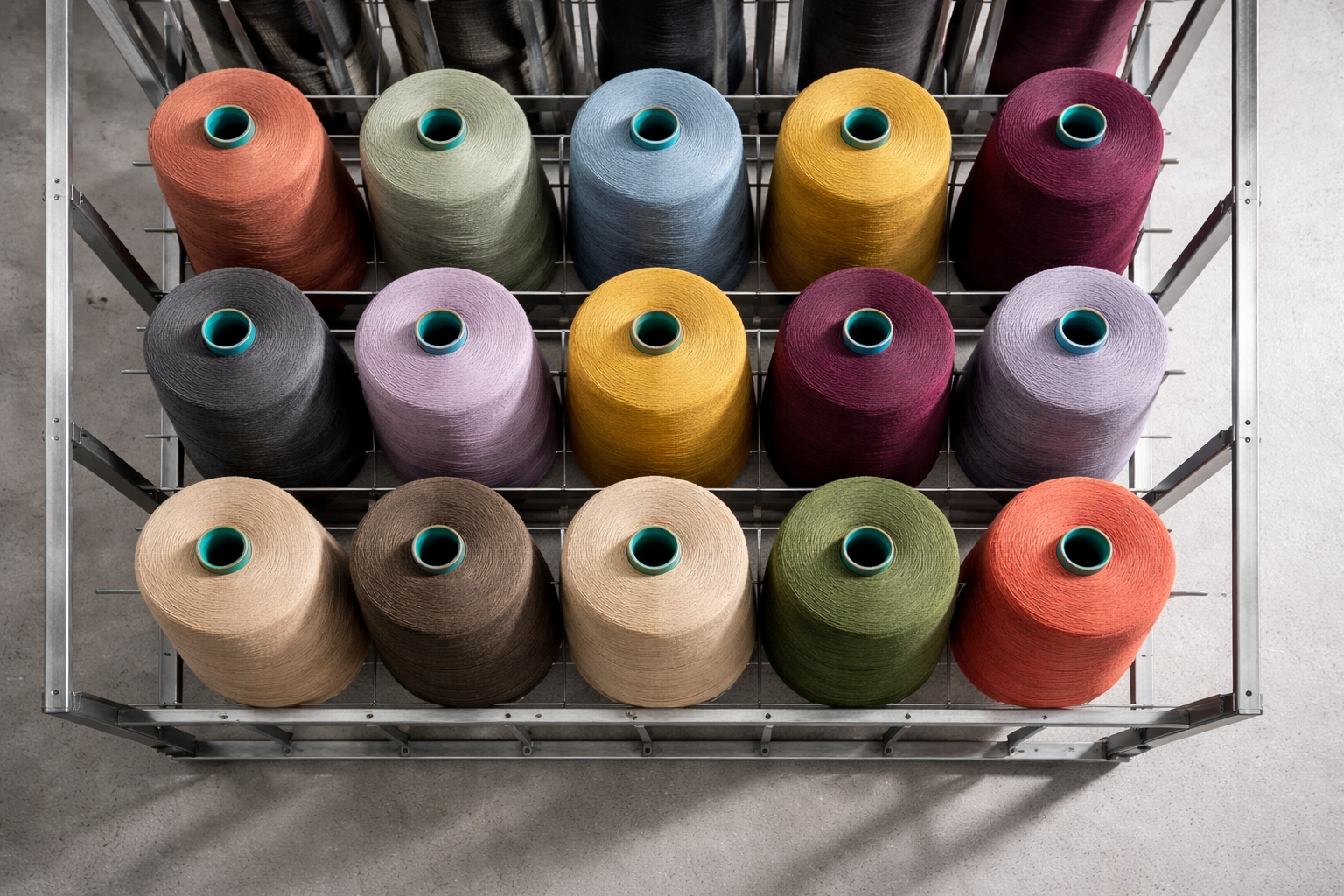
Pantone color development for industrial yarn in Leon, Mexico
Color lab that translates textile Pantone references into validated recipes on polyester and cotton, ready for sampling and repeatable production.
From the Pantone code to a validated recipe on real fiber
Matching does not stop at the chart. The lab formulates on the target yarn and generates a sample that is evaluated in a production context before scaling.
- Pantone TCX, TPX, and proprietary brand references
- Formulation adjusted by fiber and yarn count
- Lab sample for visual and technical approval
Formulation, adjustment, and technical closure before production
Each development goes through initial formulation, iterative adjustments if the shade requires them, and a technical closure that documents the approved recipe for repetition.
- Base recipe validated in the lab
- Feedback and correction with the client
- Reference documentation for reorders
Off-chart colors and proprietary brand developments
DisruptColor also develops shades that are not in the Pantone system, working from physical samples or proprietary client references.
- Physical samples as the starting point
- Proprietary palette development for collections
- Adjustment by end use and product behavior
A development that can be repeated, not just approved once
Development closure includes recipe documentation, process conditions, and batch observations so that future repeats have a clear framework.
- Recipe linked to run conditions
- Comparison between current and previous batch
- Foundation for reorders with less uncertainty
Common questions
What is Pantone color development for yarn?
It is the process of translating a textile Pantone reference into a validated dyeing recipe on the real fiber. It includes lab formulation, approval sample, and documentation for repeatable production.
How many iterations does a Pantone match need?
It depends on the shade complexity and the fiber. Simple tones can be closed in one or two lab rounds, while special shades or fibers with particular behavior may require additional adjustments.
Does a Pantone color look the same on cotton and polyester?
Not necessarily. The color reading changes depending on the fiber, yarn count, and construction. That is why each Pantone development is validated directly on the target substrate, not only on the reference chart.
Can color be developed without a Pantone reference?
DisruptColor also works with physical samples, proprietary brand references, or special shades that are not in the Pantone system. The lab translates them into a validated recipe on the target fiber.
How is a Pantone development documented for reorders?
Each development is linked to its recipe, process conditions, and batch observations. That documentation allows the color to be repeated with less uncertainty when a new order is placed.
Does DisruptColor work with Pantone TCX and TPX?
DisruptColor uses textile Pantone references as a starting point. The chart type (TCX, TPX, or other) is considered alongside fiber and end use to define the most accurate development route.