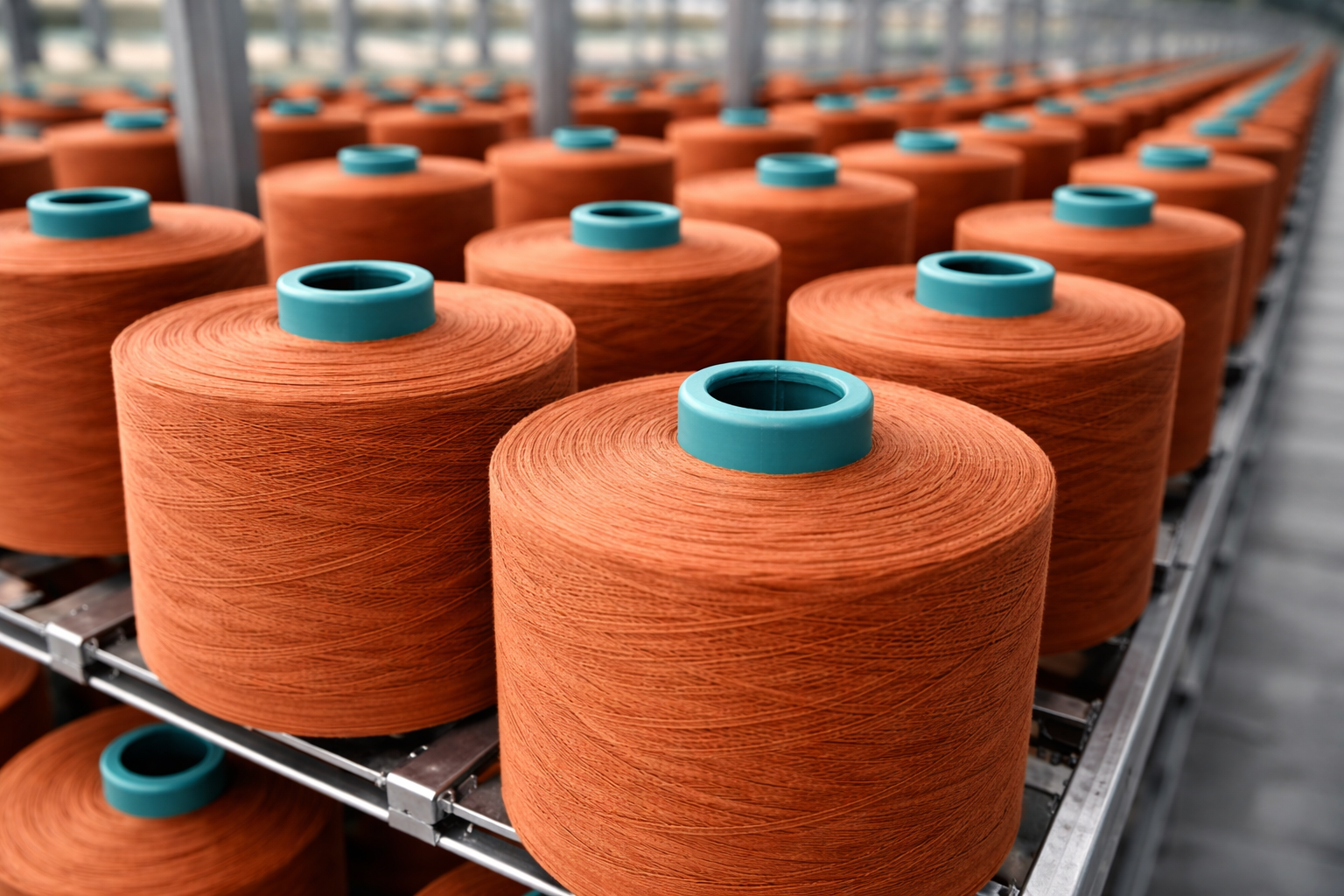
Industrial polyester and cotton yarn dyeing in Leon, Guanajuato
Specialized plant for color fixation on yarn with batch control, water treatment, and traceability for textile manufacturing in the Bajio region and across Mexico.
Polyester and cotton with differentiated process routes
Each fiber follows its own technical route that considers yarn preparation, fixation chemistry, and drying conditions to achieve stable color.
- Filament, textured, and recycled polyester subject to validation
- Carded and combed cotton
- Adjustments by yarn count, construction, and end use
Fixation, drying, and re-coning with operational traceability
The dyeing sequence includes yarn preparation, fixation baths, centrifuging, drying, and re-coning to deliver a batch ready for manufacturing.
- Lab recipe validation before scale-up
- Correlation between sample, pilot, and production
- Logging of conditions for each run
From 1 kg samples to 100 kg production runs
The batch model allows starting with a technical lab sample and scaling in a controlled way up to full production runs.
- 1 kg for technical lab samples
- 5-20 kg for pilots and approval
- 50-100 kg for production runs
Common questions
What fibers can be dyed at the DisruptColor plant?
The plant is equipped to dye polyester yarn (filament, textured, and recycled with prior validation) and cotton yarn (carded and combed). Each fiber follows a different preparation and fixation route.
How long does the yarn dyeing process take?
Timing depends on the stage: a lab sample can be ready in a few days, while a production run is scheduled based on volume, fiber, and plant load. DisruptColor aligns timelines from the first conversation.
What advantages does yarn dyeing have over fabric dyeing?
Yarn dyeing provides greater control over color uniformity before the yarn enters weaving, braiding, or assembly processes. It also enables multicolor developments and patterns that are not possible with fabric dyeing.
How is batch-to-batch repeatability ensured?
Repeatability is sustained by documenting the approved recipe, process conditions, and observations from each run. That traceability allows future batches to have a clear framework for comparison.
Can yarn be dyed for samples before production?
DisruptColor's model includes lab samples from 1 kg to validate color, recipe, and yarn behavior before scaling to pilots or production runs.